
Why the Future of Mortgage Origination May Belong to Construction Finance Specialists
The mortgage industry has undergone significant changes over the past several years. As interest rates normalized and traditional refinance volume declined, many mortgage professionals found themselves searching for new opportunities to grow their business.
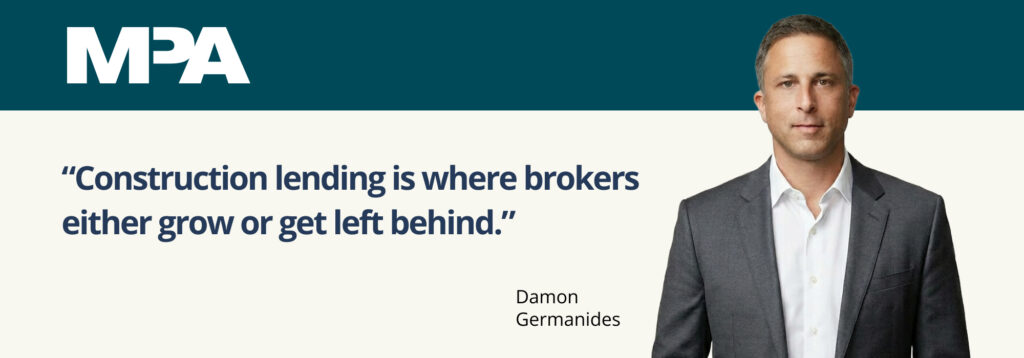
According to Damon Germanides, co-founder of Insignia Mortgage, one of the most compelling opportunities may be hiding in plain sight: construction lending.
In a recent feature published by Mortgage Professional America (MPA), Damon explored how construction financing has evolved from a niche lending category into one of the most underserved—and potentially rewarding—segments of the mortgage market.
The Growing Demand for Construction Loans
America continues to face a well-documented housing supply shortage. At the same time, many homeowners are choosing to renovate, expand, rebuild, or construct custom homes rather than compete in an inventory-constrained housing market.
Yet obtaining construction financing remains challenging.
While private capital has become increasingly active in serving professional builders and developers, many traditional banks have significantly reduced their consumer construction lending programs. This has created a financing gap for:
- High-net-worth borrowers
- Self-employed professionals
- Business owners
- Investors
- Borrowers with complex income structures
- Homeowners seeking major renovations or ground-up construction financing
For qualified borrowers, finding a lender that understands both construction risk and non-traditional income documentation can be difficult.
Why Construction Lending Requires Specialized Expertise
Unlike conventional residential mortgages, construction loans require a deeper level of analysis and project evaluation.
Mortgage professionals must understand not only the borrower’s financial profile but also the viability of the project itself.
This includes reviewing:
- Construction budgets
- Contractor agreements
- Architectural plans
- Permits and approvals
- Draw schedules
- Project timelines
- After-completion valuations
- Exit strategies
Successfully navigating these factors requires a blend of real estate finance expertise, project analysis, and risk management.
As a result, construction lending has become a specialization that many mortgage professionals avoid—but one that can create substantial value for clients.
Construction Lending and the Rise of Non-QM Solutions
One of the most exciting developments in today’s market is the growing intersection between construction lending and Non-QM mortgage products.
Historically, many self-employed borrowers struggled to qualify for construction financing because traditional underwriting relied heavily on tax returns that often failed to reflect actual cash flow.
Emerging alternatives—including bank statement loan programs and other Non-QM solutions—are beginning to create new pathways for borrowers who have strong financial profiles but unconventional documentation.
This trend has the potential to expand access to construction financing while giving mortgage professionals more tools to serve complex borrowers.
Why Construction Financing Can Help Mortgage Brokers Grow
Market cycles reward adaptability.
Mortgage professionals who develop expertise in construction lending, bridge financing, mixed-use properties, and small-balance commercial transactions often find themselves less dependent on traditional purchase and refinance volume.
Construction lending offers several advantages:
Strong Referral Opportunities
Builders, architects, contractors, developers, real estate professionals, and satisfied borrowers frequently become repeat referral sources.
Higher Barriers to Entry
The complexity of construction lending creates a competitive advantage for brokers willing to invest in learning the space.
Long-Term Client Relationships
Construction projects often span months or years, creating opportunities to build deeper relationships with clients.
Diversified Revenue Streams
Construction loans can complement traditional residential mortgage origination and help smooth volume fluctuations during market transitions.
The Future of Construction Lending
As housing supply challenges continue, demand for renovation financing, custom home construction loans, and ground-up development financing is expected to remain strong.
At the same time, private lenders, Non-QM lenders, and specialized mortgage professionals are increasingly filling the gaps left by traditional institutions.
For mortgage brokers, the opportunity is clear: developing expertise in construction finance today may create a sustainable competitive advantage for years to come.
Partner With Construction Lending Experts
At Insignia Mortgage, we specialize in helping borrowers navigate complex financing scenarios, including:
- Construction Loans
- Ground-Up Development Financing
- Bridge Loans
- Non-QM Mortgages
- Jumbo & Super Jumbo Loans
- Bank Statement Loans
- Investor Financing
- Luxury Real Estate Lending
Whether you’re building a custom home, renovating an existing property, or exploring creative financing options, our team has the experience and relationships needed to help structure a successful solution.
Learn More
Read Damon Germanides’ full feature in Mortgage Professional America, “Construction Lending Is Where Brokers Either Grow or Get Left Behind” here.
Contact Insignia Mortgage today to discuss your construction financing needs and explore the lending solutions available in today’s evolving market.