Mortgage Broker Outlook for 2026: AI, Affordability, and Why “Honest Advice + Fast Execution” Wins

Key takeaways from MPA TV’s Broker Intel discussion featuring Insignia Mortgage co-founder Damon Germanides

The mortgage industry enters 2026 with a familiar mix of pressure and possibility: affordability remains strained, inventory is tight, and regulation continues to evolve. In a recent Broker Intel discussion on MPA TV, the expert panelists agreed that brokers who pair technology-driven speed with real human guidance will continue winning market share.

Insignia Mortgage co-founder Damon Germanides joined Tom Wallace (Edge Home Finance) and Andrew Russell (RCG Mortgage) to discuss the current mortgage landscape and what originators should do next. Their conversation wasn’t theoretical. It was grounded in day-to-day reality. They provided perspective on situations where borrowers can’t find homes, how pre-approvals die on the vine, and the growing gap between “getting leads” and “closing clean.”

Below are the highlights of this expert talk and its impact on borrowers, real estate partners, and anyone looking for a smarter lending strategy in 2026.

1) AI is speeding up mortgages—but it’s not replacing the originator

The panel agreed: AI is changing the operating tempo of mortgage origination.

Tom Wallace described a world where underwriting capacity expands dramatically—underwriters who used to manage 20–30 files can now handle far more, and complex income scenarios can be evaluated faster. Now, loan officers get answers quicker, while borrowers and agents get clarity sooner.

Damon echoed the value of these tools, in particular the opportunity to shorten turn times, improve responsiveness to agents, and give borrowers more immediate feedback on qualification and options. He believes the right stack can “supercharge” brokers—but only if it’s designed for how originators actually work.

Andrew Russell brought the counterweight brokers need to hear: technology is not a substitute for business development and relationships. In his words, “he or she who makes the calls wins.” Especially in the purchase business, grit, communication, and trust still decide which offers get accepted and which lenders win referral loyalty.

Overall, AI is an advantage—but only when paired with strong execution and human credibility.

2) The purchase market is still a relationship game—especially in low inventory environments

When inventory is thin, being “good” isn’t enough. Andrew framed it like this: there are fewer “pies,” so you need a bigger share of the “slices.” His team leans into proactive listing-agent outreach—positioning their buyer as strong and emphasizing speed to close.

Inventory constraints make every transaction more competitive, especially this 2026. Borrowers aren’t just shopping for rates, they’re trying to win homes. Realtors aren’t just looking for pre-approvals—they’re looking for certainty, communication, and fast problem-solving- especially when a deal gets tight.

Moreover, Damon emphasized the fact that purchase transactions continue to rely on credible, real-time human conversation. AI may help with refi automation and internal efficiency, but on purchases, the buyer and listing side still want an originator who understands nuance, can anticipate issues, and can explain the “why” behind the numbers. In a tight market, brokers win by delivering confidence, speed, clarity, and expertise.

3) The biggest headwinds: affordability and inventory (and they’re hitting even high earners)

Damon’s commentary on affordability was one of the sharpest moments in the discussion—because it didn’t romanticize the market.

Insignia Mortgage operates heavily in major metros (including California), and Damon described a growing trend: pre-approvals that fall apart not because credit fails, but because reality strikes. Even when financing is possible, borrowers reach a point where the monthly stress becomes defeating.

He highlighted a dynamic that many high-income buyers experience in expensive markets: even households earning what most would consider “top-tier” incomes can still struggle to purchase a home without taking on a payment that consumes an uncomfortable share of their monthly cash flow.

What stood out most wasn’t just the market observation;it was the philosophy behind it:

Sometimes the best advice isn’t “yes.” It’s helping the borrower decide whether the deal actually makes sense for their life.

That’s a key element of Insignia’s positioning: complex lending is not just about approvals—it’s about advising intelligently when leverage and affordability collide. Affordability pressure isn’t just a loan problem—it’s a decision-quality problem. Great brokers help clients think clearly.

4) Broker retention is an underused growth lever (and a major industry weakness)

Tom Wallace made a strong point that many brokerages don’t want to confront: retention in the broker channel is low compared to other lending models.

His argument was not about blaming originators—it was strategic: if brokers could materially improve retention through better systems and outreach, they would create a major advantage, especially when market volume is harder to come by.

Damon’s earlier comments connect directly to this: the broker who is honest, consistent, and easy to work with becomes the person borrowers come back to—sometimes after another lender fails to deliver. Retention isn’t accidental. It’s built through process, communication, and trust—especially when the first deal is complex.

5) Damon’s “wake-up call” strategy: diversify lender relationships and expand solutions

Damon outlined one of the biggest shifts in how he’s run Insignia over the past few years… When rate changes happened quickly, Insignia’s strong relationships with smaller banks and credit unions became a vulnerability—those institutions pulled back or hit capacity limits. That created a “double whammy” with rising rates and reduced lender availability.

Insignia’s response wasn’t panic. It was strategy. 

  • They diversified capital sources and products so that business isn’t dependent on a narrow lender set.
  • They expanded into complementary solutions—Damon referenced building Insignia Capital Corp. as a bridge-lending platform to support developers and builders, while also creating a longer client lifecycle (bridge now, permanent financing later when stabilized).

Flexibility and innovation is key to success. The modern broker wins by being a solutions platform, not a single-lane lender.

6) Tech adoption must match the LO, not the other way around

Technology is only valuable if it becomes behavior, and behavior only changes when tools are intuitive. This was a very “real-world” point, and it matters for any growth-minded brokerage.

Damon noted that many successful originators are not technologists—and if the system is too complicated, it won’t be used. The goal is not “more tools.” The goal is better visibility and easier daily execution: dashboards, analytics, referral-source clarity, and action prompts that help LOs know where to focus.

7) 2026 outlook: don’t wait for rates to save you—build like it’s still hard

Overall, everyone agreed that 2026 will reward brokers who combine modern outreach with old-school competence.

Damon’s 2026 forecast summary:

  • He’s not assuming rates will be a tailwind.
  • If they improve, great—but brokers should prepare as if they won’t.
  • The brokers who commit through challenging conditions build their reputations, develop niches, and “plant seeds” that pay off later.

Andrew’s 2026 perspective summarized as a two-part operating system:

  1. What you do when the phone rings (process, execution, tech, follow-through)
  2. What you do to make the phone ring (marketing, business development, relationships, education content)

Tom’s 2026 forecast:

Tom shared his belief that the 2026 broker is competing in a world where social and digital education matter more than traditional media. He emphasized that the originators who can teach clearly will win attention and trust at scale.

What does this mean for borrowers and partners working with Insignia Mortgage?

If you’re a borrower, investor, or real estate partner navigating 2026, the MPA TV discussion reinforces what Insignia Mortgage is built for:

  • Complex files that require real underwriting intelligence
  • Speed and execution when timelines are tight
  • Honest guidance when affordability and leverage need to be balanced
  • Creative lending options, including jumbo, non-agency strategies, and bridge-to-perm pathways
  • A team led by professionals who understand that mortgage decisions are not just transactions—they’re long-term financial commitments

Damon’s approach to lending leadership is clear: use technology to move faster, but never replace the human expertise that wins purchases and builds trust. In a market where many deals die from uncertainty, that combination is exactly what clients and partners need.

If you’re planning a purchase, refinance, investment, or construction-related financing strategy in 2026, connect with the Insignia Mortgage team and explore options designed around your real-world scenario—not a one-size-fits-all box. Connect with our team today by clicking here.

References:

Germanides, Damon. “Experts give their thoughts on navigating challenges to find success in 2026.” Mortgage Professional America, Jan. 7, 2026. (Mortgage Professional)

“Damon Germanides.” Mortgage Professional America (Broker Intel profile). Accessed Jan. 8, 2026. (Mortgage Professional)

Market Commentary 09/19/2025

As expected, the Fed lowered rates by 0.25% this week — a move well broadcast by the markets and reflected in the recent drop in both Treasury and mortgage rates. In addition to the movement in rates, what stood out most was the Fed’s accompanying commentary and economic projections. Interestingly, they’re now forecasting slightly higher inflation, steady employment, and modest GDP growth. With that outlook, one might wonder whether a rate cut was even necessary. Still, the Fed made its move, sparking renewed debate about what comes next.

Although some analysts are calling for as many as five rate cuts over the next year, we’re not convinced. Our base case is for two cuts, maybe a third — but that’s far from certain. Inflation remains sticky, and while the labor market isn’t booming, it’s holding up reasonably well. Despite a slowing economy, it’s important to consider the potential impact of Trump-era economic policies, which are just beginning to roll back in and could provide a tailwind in the coming quarters.

One curious development following the Fed announcement was the behavior of the 10-year Treasury. It briefly dipped below 4%, but has since climbed and now sits around 4.12%. This uptick reflects a growing concern among bond pros: when the Fed cuts short-term rates, longer-term yields don’t always follow — and in some cases, they move higher. A large amount of supply is hitting the bond market, with hundreds of billions in Treasuries coming due that need to be refinanced. Add in persistent fiscal deficits and inflation still tracking above target, and you’ve got a recipe for upward pressure on long-term rates.

What This Means for Borrowers

The good news is that lower short-term rates are already providing relief for borrowers with floating-rate loans, HELOCs, or bridge financing tied to short-term benchmarks. For borrowers seeking long-term fixed-rate solutions, the outcome depends on where the 10-year Treasury settles.

For now, we believe the majority of the rate drop has already been priced in. We don’t foresee significantly lower rates from here. That said, public awareness of this move is growing. As expected, our phones have been lighting up with calls for pre-approvals and refinance requests.

Market Commentary 09/05/2025

A softer-than-expected August Jobs Report pushed equity prices and bond yields lower last week. While consensus estimated 77,000 new jobs, the actual number came in at just 22,000. These results provide further evidence that the U.S. employment picture is weakening. We’re seeing firms across sectors slow or even freeze hiring as macroeconomic uncertainty builds.

Weakening Jobs Data Has Fed On Track For Rate Cuts

This jobs data brings the Fed’s dual mandate—price stability and full employment—into sharp focus. With inflation still above target and employment softening, the central bank faces a difficult decision: cut rates now to support labor markets, or hold steady to avoid reaccelerating price growth. One complicating factor is the impact of new tariffs, which have increased input costs for wholesalers but have yet to be passed on to consumers. If these costs begin to flow downstream, renewed inflationary pressure could be inevitable.

All signs currently point to a 25-basis-point rate cut at this month’s Fed meeting. Nonetheless, markets remain on edge. Key upcoming data, including the PPI and CPI reports, could shift the calculus. If wholesalers start to pass along costs as inventory cycles out, consumer pricing could suffer just as rate relief is being considered.

What Does This Mean for Borrowers and Real Estate Professionals?

Short-term rates have already fallen by more than 50 basis points across the front end of the curve, providing meaningful relief for borrowers with floating-rate mortgages or upcoming loan resets. This drop also benefits those pursuing bridge or construction financing, as pricing on short-term debt tends to track closely with Treasury yields.

On the long end of the curve, the 10-Year Treasury has dipped into the low 4% range, which supports lower rates for both conforming and jumbo fixed-rate mortgages. Although we’re unlikely to revisit pre-COVID rate levels, the market is beginning to price 30-year fixed loans in the 5.50% range and ARM products between 4.75% and 5.00%. The current rate movement represents a significant psychological shift for buyers initially sidelined by high rates.

Brokers Are Back –Why Are They Playing a Critical Role Now?

Bank underwriting remains tight, and many institutions are allocating capital toward other, more profitable business lines. This has created a surge in demand for non-QM (non-qualified mortgage) loans—products that offer flexibility for self-employed borrowers, real estate investors, foreign nationals, and other non-traditional profiles.

Unlike agency loans, most non-QM products must be originated through a licensed mortgage broker. At Insignia Mortgage, this is where we shine. Our “Individualized Lending” approach pairs borrowers with the right lender from our deep network of credit unions, private banks, and institutional partners. Whether it’s no-tax-return jumbo loans, interest-only structures, or construction and bridge financing, we help navigate financial complexity and get deals funded.

As rates shift and the credit landscape evolves, we believe now is a moment of opportunity. If you’re one of the advisors, realtors, or developers working with borrowers who don’t fit inside the traditional lending box, let’s connect asap. The Insignia Mortgage team has over a decade of success with closing non-QM loans. 

Market Commentary 08/15/25

Mortgage Rates Ease As Fed Weighs Rate Cut

This week kicked off with better-than-expected consumer inflation data, sparking optimism that the Federal Reserve might cut rates in September. In some cases, this rate cut could be as much as 50 basis points. However, Thursday’s PPI (Producer Price Index) report painted a more complicated picture. The data showed wholesalers absorbing much of the inflation in goods, indicating that some costs have yet to be passed on to consumers. If those higher wholesale prices begin to filter through, future CPI readings could rise, making it harder for the Fed to justify aggressive rate cuts.

That said, given July’s weak jobs report, if the Fed is forced to choose between slightly higher inflation and easing financial conditions to support a slowing economy, our bet is they will cut rates to boost economic activity. The two-year Treasury yield has fallen to 3.75%, helping push many adjustable-rate mortgage products below 5.5%. In the jumbo space, we are now seeing rates under 6%, prompting renewed interest from borrowers. Nonetheless, with longer-dated Treasuries still near 5%, 30-year fixed money remains expensive at over 6%.

The current landscape is undeniably complex. Financial conditions don’t appear overly restrictive—IPOs are rolling out, Bitcoin and speculative trading are hot, equity indexes are at all-time highs, and credit spreads remain tight. Under normal circumstances, these would not be conditions for a Fed rate cut. But we live in unusual times. Political pressure to cut rates, coupled with the appointment of another dovish Fed governor, could put the central bank in a position where it cuts once, and likely twice, before year-end to fend off critics. If inflation reaccelerates more than expected in the coming months, those cuts could backfire. This is no easy time to be in the money game.

These are the opinions of the author. For financial advice, please talk to your CPA or financial professional.

Market Commentary 08/01/2025

Market Rally Hits A Speed Bump

Markets rallied through Thursday this week. Financial conditions felt loose, whether it was a high-flying IPO, a tight-spread bond trade, or a huge day-trade bet, with plenty of risk-taking across asset classes. The Fed, for its part, held rates steady, choosing patience as it waits for a clearer signal from inflation or jobs data before making its next policy move.

Friday’s jobs report delivered a jolt. The numbers came in sharply below expectations, rattling confidence and pushing investors to rethink the “all-clear” narrative. Adding fuel to the uncertainty, Trump’s latest tariff announcement landed the same day, further muddying the outlook for growth and trade.

We expect to see some better pricing on mortgages across the yield curve following the sharp drop in yields, after the jobs report. That said, the overall economy still appears resilient; consumer confidence is rebounding, corporate balance sheets remain healthy, and despite frustration over the cost of living, consumers continue to spend. With that backdrop, the recent rate dip may prove short-lived if the data turns stronger in the coming weeks.

The odds of a Fed rate cut in September are back on the table after Friday’s dismal jobs numbers. Wednesday’s Fed meeting had market participants thinking a rate cut was unlikely.  With inflation still trending above the Fed’s 2% target, will the Fed flinch and lower interest rates out of fear of a slowing economy, or hold steady given that inflation is still elevated? Also, even if the Fed lowers short-term rates, how will the year 10 Treasury react? We will know much more in the coming weeks.

While much of the U.S. economy is service-driven and less sensitive to higher rates, housing and commercial real estate remain directly impacted. The 10-year Treasury continues to be elevated relative to pre-pandemic norms, keeping mortgage and construction financing expensive and weighing on both consumers and investors. Limited housing supply—especially in major markets with little new construction underway—continues to challenge affordability and transaction activity.

qr-code-census-track-1

Check Property Eligibility with Census Data

How to confirm if a property is eligible for the program:

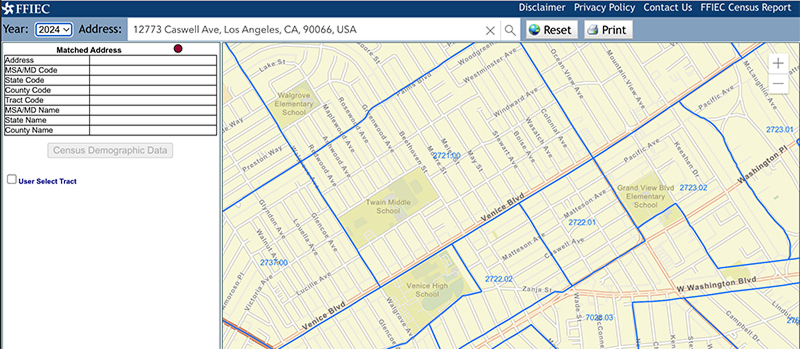
  1. First, click this link to open a new page with the census code geomap. See the screenshot below. (https://geomap.ffiec.gov/FFIECGeocMap/GeocodeMap1.aspx)
  2. Set the Year to 2024 or 2025 if available.
  3. Input the address on the top line and select the correct property.
  4. Once the address shows up, click on Census Demographic Data
    If the Tract Minority % is over 50 then the property is eligible.

These are the opinions of the author. For financial advice, please talk to your CPA or financial professional.

Market Commentary 06/13/2025

Rising Geopolitical Risks and Evolving Economic Signals

Market attention is expected to intensify over the weekend as geopolitical tensions rise between Israel and Iran. Equities dropped on Friday following reports of Israeli strikes on key nuclear and strategic sites. Oil prices and bond yields increased, while U.S. Treasuries—typically considered a safe haven—also rallied. Despite yields soaring elsewhere, the rally in Treasuries indicates ongoing market concerns about inflation, the growing U.S. debt burden, and a weakening dollar.

Markets have been relatively calm over the past 45 days, having digested tariff developments, but this new escalation could trigger renewed volatility. Any sustained disruption to oil markets could make energy prices more costly, exacerbating upward pressure on bond yields.

On the inflation front, both CPI and PPI came in lower than expected. However, some analysts suggest the soft prints may reflect pre-buying of goods ahead of tariff implementation. June’s data will provide more clarity. With inflation readings cooling and jobs data remaining stable—but not overly strong—there’s a growing case for the Fed to begin seriously discussing rate cuts. The upcoming Fed meeting will be closely watched, particularly as the White House continues to push for lower rates. The potential conflict in the Middle East only adds complexity to the Fed’s decision-making.

Higher interest rates are progressively weighing on real estate investors, business owners, and private equity. Many investment deals no longer pencil out once adjusted for today’s cost of capital. This is evident across housing, multifamily, and construction financing. Home prices begin to soften as inventory lingers, with lenders tightening guidelines. While prime borrowers still secure approvals, others are being pushed into the non-QM or private credit markets.

Watch for rising auto loan and credit card delinquencies as early signs of consumer strain. Despite strong public market performance, the combined effects of inflation, elevated rates, and a gradually slowing economy take its toll on everyday Americans.

These are the opinions of the author. For financial advice, please talk to your CPA or financial professional.

Market Commentary 06.06.25

A better-than-expected May jobs report pushed equities and bond yields higher. An in-depth review of the data shows signs of slowing in certain areas of the economy, yet the report largely dismissed concerns of an imminent downturn. For mortgage markets, however, the report was not welcome news—odds of a Fed rate cut in June or July dropped sharply. While there is still hope for a September cut, the continued strength of both the U.S. economy and labor market reinforces the “higher for longer” thesis on interest rates.

Meanwhile, the “Big Beautiful Bill” is not being well received by bond traders, particularly on the long end of the curve. We’ve consistently expressed concern over the nation’s unchecked spending and structural deficits, both of which we believe are key drivers behind rising yields. Inflation appears temporarily subdued, despite upward risks from new tariffs and tighter immigration policies, and U.S. interest rates remain elevated relative to those of other developed countries. From our perspective, this indicates more than just inflation risk, it represents the market’s concern over America’s growing debt burden and lack of political resolve to address it.

In housing, the story remains the same: low inventory, high prices, and a cost of living that’s straining affordability across income levels. What was once primarily a challenge for lower-income households is now affecting the middle and upper classes as well. That said, one bright spot is emerging; A-paper lenders are beginning to reprice more competitively, aided by the steepness of the yield curve. For top-tier borrowers, this could result in ARM rates dipping below 5% in the near term. Unfortunately, borrowers reliant on alternative loan products—typically structured as 30-year fixed loans—may not reap this benefit, as such rates remain stubbornly high.

All eyes now turn to next week’s CPI and PPI prints. For residential real estate to regain momentum, the market will need a catalyst—either lower prices or lower interest rates. Stay tuned and make sure you’re subscribed to Insignia Mortgage’s Market Commentary for the latest updates and rates.

Market Commentary 05/09/2025

Tariffs, Debt, And A Cautious Consumer

Since our last update, financial markets have been agitated by heightened volatility, driven by renewed tariff announcements. Growth-sensitive equities were hit hard following Liberation Day, while bonds—typically a safe haven in turbulent markets—barely moved. Such a muted bond response highlights a deeper concern over the United States’ ballooning debt. With over $4 billion in daily interest expense, investors are demanding higher yields to compensate for increased risk, making this a “today” problem instead of a “future” one.

Further compounding uncertainty are unresolved trade policies, a Federal Reserve reluctant to lower interest rates, and the potential for a one-time price reset once tariff clarity emerges. These dynamics are weighing heavily on both consumer sentiment and business investment, causing noticeable delays in capital deployment.

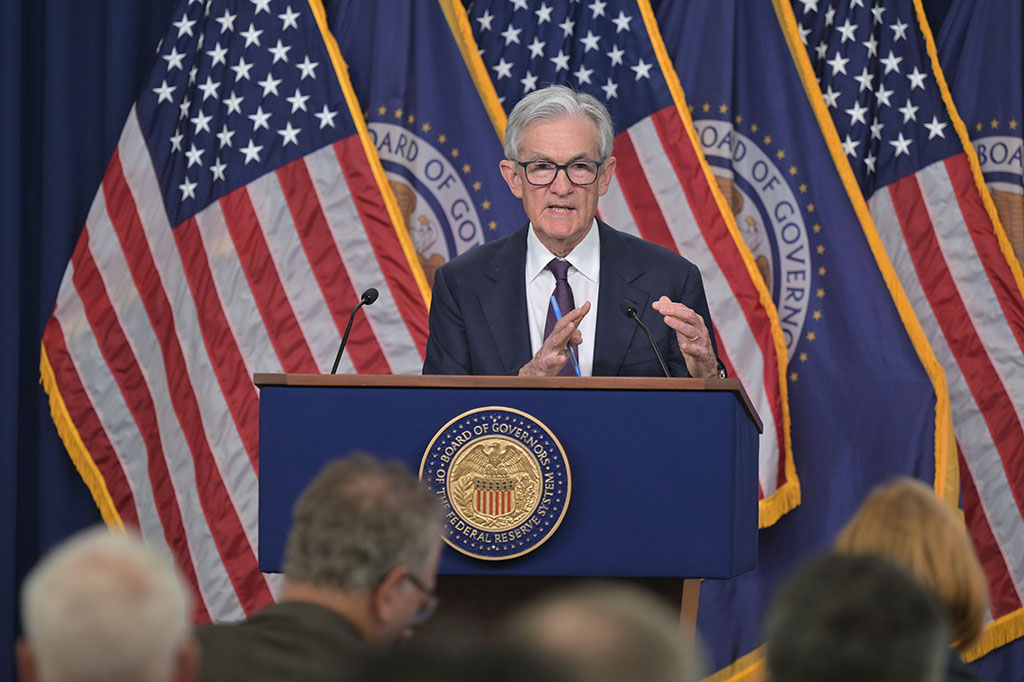
Chair Powell answers reporters’ questions at the FOMC press conference on May 7, 2025.
FOMC meetings, calendars, statements, and minutes are available here.

While certain soft indicators point to a fatigued consumer, the labor market remains resilient. This creates a policy dilemma for the Fed—why cut rates in the face of solid job data and risk fueling inflation? Nonetheless, rising delinquencies on auto loans and credit cards suggest that many Americans are feeling financial pressure despite headline employment strength.

The real estate market, and housing in particular, is experiencing the consequences of this macro backdrop. After a decade of strong appreciation, home prices appear to be leveling off. Affordability challenges persist, with many potential buyers unable to qualify for conventional financing. Even as banks offer competitive pricing on traditional loans, borrowers are increasingly opting for creative, non-traditional solutions—despite the higher cost.

Client feedback continues to reflect a difficult business climate. Many are accessing home equity through cash-out refinances—either to fund new home purchases, support business operations, or consolidate higher-interest debt. As a result, the bulk of today’s lending activity is concentrated in nuanced and bespoke mortgage products that provide the flexibility today’s borrowers require.

Mortgage rate surveys support the view that lenders are aggressively competing for a limited number of qualified prospects. A sampling of current rates across various loan types (for illustrative purposes only) is shown below:

  • Private bank loans: Starting at 5.375%
  • Boutique bank loans: Starting at 6.125%
  • Profit and loss-based loans: Starting at 6.25%
  • Bank statement loans: Starting at 6.500%
  • DSCR (Debt Service Coverage Ratio) loans: Starting at 6.875%
  • Bridge loans: Starting at 8.500%

View the latest interest rates and subscribe to Insignia Mortgage’s Weekly Market Commentary by Top Originator, Damon Germanides.

Market Commentary 04/11/2025

Tariffs, Volatility & Mortgage Market Whiplash

The Trump administration’s aggressive tariff announcements sent global equity and bond markets into a tailspin, driving the CNN Fear & Greed Index down to a 4. We are now at levels not seen since the Great Financial Crisis or the shock of COVID. While the current backdrop may not be as severe, investor panic is evident. Since World War II, global growth has relied on comparative economics — countries focusing on what they produce best and trading for the rest. But persistent U.S. trade deficits have led this administration to push for a more level playing field, targeting tariffs and VAT-related pricing disadvantages overseas. The scale of the proposals, however, rattled bond markets and led to a temporary pullback in policy.

Mortgage rates dipped briefly as the 10-year Treasury yield touched below 4%, but that rally was short-lived. The reversal wasn’t driven by inflation data — CPI and PPI came in cooler than expected — but rather by fears of tariff-induced inflation. Manufacturers are now in a bind and consumer confidence is weakening, which makes passing on higher input costs difficult. As a result, we face potential margin compression, weaker earnings, and continued market volatility.

One bright spot for consumers: oil has dropped below $60/barrel, easing some cost-of-living pressures. And while equity markets have pulled back roughly 10% from recent highs, this correction may be a healthy repricing after an extended period of overvaluation.

In the housing market, expect:

  • Price adjustments as buyers grow more cautious
  • Cash-out refinances by self-employed borrowers seeking liquidity
  • Tighter underwriting as lenders brace for inflation, recession risk, and asset repricing
  • More loan applications moving to the non-QM or private credit space due to tightened credit box by big banks (bank statement loans, no-income verification loans, DSCR loans, bridge loans).

On the interest rate front, Wall Street is split — from zero to four cuts forecasted this year. Based on borrower sentiment and softening labor trends, we believe the Fed may deliver 1–2 rate cuts. Consumers are watching their wallets, and business owners are becoming more defensive.

If the Fed does ease later this year, it could bring much-needed relief to mortgage rates — a welcomed boost for the housing sector.