AI, Interest Rates, and the Future of Mortgage Lending: Key Insights from the MPA Broker Intel Panel

The mortgage industry continues to evolve rapidly in 2026. From advances in artificial intelligence to shifting interest rate expectations and tighter housing supply, brokers and borrowers alike are navigating a more complex lending environment.

Recently, Damon Germanides, Co-Founder of Insignia Mortgage, joined the Broker Intel panel hosted by Mortgage Professional America to discuss what lenders and borrowers should expect in today’s market. The panel explored several key trends shaping mortgage lending today, including the growing role of AI, the outlook for interest rates, and the continued expansion of the mortgage broker channel.

Below are the major takeaways from the conversation.

1. Mortgage Market Activity Is Improving in 2026

After several challenging years for the housing market, early indicators in 2026 suggest improved activity. According to Damon, mortgage application volume has increased compared to previous quarters. This is driven in part by slightly improved interest rate conditions and renewed appetite from lenders.

However, one major constraint remains: housing supply.

Many borrowers are receiving loan approvals but struggling to secure homes due to limited inventory, particularly in entry-level and mid-tier markets. This imbalance between demand and supply continues to slow purchase conversions even as lending conditions improve.

For borrowers, this means preparation and strong financing strategies remain critical to maintain a competitive edge in today’s housing market.

2. The Mortgage Broker Channel Continues to Gain Market Share

Another important trend discussed during the panel was the continued growth of the mortgage broker channel. Mortgage brokers have progressively been able to offer competitive pricing compared with large retail banks by leveraging access to multiple lenders and loan products.

This flexibility allows brokers to:

  • Compare rates across multiple lending institutions
  • Structure more customized loan solutions
  • Move quickly when borrowers need approvals or adjustments

As a result, more borrowers and loan originators are shifting toward broker-based lending models. For clients working with experienced brokerage firms like Insignia Mortgage, this often translates to greater access to loan options and more competitive pricing.

3. AI Is Changing Mortgage Operations—But Not Relationships

Artificial intelligence is increasingly becoming part of mortgage origination workflows. During the panel discussion, Damon highlighted how technology and automation are helping loan teams manage tasks like follow-up, reminders, and lead tracking.

These tools can improve efficiency considerably, allowing loan officers to focus more time on advising clients and structuring deals rather than handling repetitive administrative tasks.

However, one message from the panel was clear:

AI is improving efficiency—but it cannot replace trusted mortgage advice.

Mortgage lending remains fundamentally relationship-driven. Borrowers still rely on experienced professionals to guide them through financing decisions, particularly for complex scenarios involving jumbo loans, investment properties, or construction financing.

4. HELOCs and Second Liens Are Growing in Popularity

Another notable trend discussed in the panel is the renewed interest in home equity products. With many homeowners locked into historically low first-mortgage rates from prior years, refinancing often does not make financial sense. Instead, borrowers are increasingly turning to:

  • HELOCs (Home Equity Lines of Credit)
  • Second lien loans
  • Business or unsecured credit lines

These financing options allow homeowners to access equity for investments, renovations, or liquidity without replacing their existing mortgage. For borrowers seeking flexibility, these products are becoming a valuable part of the lending landscape.

5. Interest Rates and the Federal Reserve Outlook

Interest rates remain one of the most important variables influencing the housing market. Panelists noted that the Federal Reserve has taken a cautious stance on rate changes due to persistent inflation pressures.

While markets anticipate potential policy shifts later in the year, the consensus view is that rates may stabilize rather than decline in the near term.

For borrowers, the key takeaway is that timing the market perfectly is difficult. Many experts emphasize that purchasing or refinancing decisions should focus on long-term financial goals rather than short-term rate speculation.

6. The Role of Technology in the Next Phase of Mortgage Lending

One of the most interesting themes from the panel was how automation is reshaping the operational side of mortgage lending. Technology platforms and AI tools are reducing the time required to originate loans and manage client communication. This shift allows brokerages to scale operations more efficiently and serve borrowers more effectively.

However, faster processes also introduce new challenges, including increased competition and pressure on margins across the lending industry. Mortgage companies that combine technology, expertise, and strong client relationships are likely to remain best positioned as the industry continues to evolve.

Main Takeaways For Borrowers

For borrowers and real estate investors, the insights from the Broker Intel panel highlight several important trends:

  • Mortgage markets are gradually stabilizing in 2026
  • Housing inventory remains one of the biggest obstacles for buyers
  • Mortgage brokers are gaining share due to flexibility and competitive pricing
  • AI is improving efficiency but not replacing expert loan guidance
  • Home equity products are becoming more widely used

Understanding these dynamics can help borrowers make more informed financing decisions in a rapidly changing market.

Watch the Full Interview

To hear the full discussion featuring Damon Germanides of Insignia Mortgage, watch the Broker Intel panel interview from Mortgage Professional America.

👉 https://www.mpamag.com/us/news/broker-intel/top-originators-on-the-growth-of-ai-in-mortgage-lending/567235

Work With Insignia Mortgage

Insignia Mortgage specializes in customized real estate financing solutions for clients nationwide, including:

  • Jumbo home loans
  • Investment property financing
  • Bridge and construction loans
  • HELOC and equity-based lending
  • Complex and high-value transactions

If you’re considering a purchase, refinance, or investment property financing strategy, our team is always available to discuss options tailored to your goals.

Market Commentary 09/19/2025

As expected, the Fed lowered rates by 0.25% this week — a move well broadcast by the markets and reflected in the recent drop in both Treasury and mortgage rates. In addition to the movement in rates, what stood out most was the Fed’s accompanying commentary and economic projections. Interestingly, they’re now forecasting slightly higher inflation, steady employment, and modest GDP growth. With that outlook, one might wonder whether a rate cut was even necessary. Still, the Fed made its move, sparking renewed debate about what comes next.

Although some analysts are calling for as many as five rate cuts over the next year, we’re not convinced. Our base case is for two cuts, maybe a third — but that’s far from certain. Inflation remains sticky, and while the labor market isn’t booming, it’s holding up reasonably well. Despite a slowing economy, it’s important to consider the potential impact of Trump-era economic policies, which are just beginning to roll back in and could provide a tailwind in the coming quarters.

One curious development following the Fed announcement was the behavior of the 10-year Treasury. It briefly dipped below 4%, but has since climbed and now sits around 4.12%. This uptick reflects a growing concern among bond pros: when the Fed cuts short-term rates, longer-term yields don’t always follow — and in some cases, they move higher. A large amount of supply is hitting the bond market, with hundreds of billions in Treasuries coming due that need to be refinanced. Add in persistent fiscal deficits and inflation still tracking above target, and you’ve got a recipe for upward pressure on long-term rates.

What This Means for Borrowers

The good news is that lower short-term rates are already providing relief for borrowers with floating-rate loans, HELOCs, or bridge financing tied to short-term benchmarks. For borrowers seeking long-term fixed-rate solutions, the outcome depends on where the 10-year Treasury settles.

For now, we believe the majority of the rate drop has already been priced in. We don’t foresee significantly lower rates from here. That said, public awareness of this move is growing. As expected, our phones have been lighting up with calls for pre-approvals and refinance requests.

Insignia Mortgage Co-Founder Damon Germanides Featured in MPA Magazine

Industry Insights on Today’s Housing Market and Creative Lending Solutions

We’re excited to announce that Damon Germanides, co-founder of Insignia Mortgage, was recently featured in Mortgage Professional America (MPA) Magazine — one of the most respected publications in the mortgage and real estate finance industry.

In his interview, Damon shares candid insights on today’s “illiquid” housing market, the impact of historically low rates, and why brokers must lead with honesty when advising clients. He also highlights how creative loan solutions, including bridge financing through Insignia Capital Corp, are helping borrowers and brokers navigate this challenging environment.

Key Takeaways from Damon’s MPA Interview

  • Why waiting for 2% mortgage rates isn’t realistic
    Damon explains that the era of ultra-low rates is over and that buyers waiting for them to return may be on the sidelines indefinitely.
  • The challenges of an illiquid housing market
    From seniors staying put to first-time buyers unable to move up, Damon outlines why housing supply remains tight and mobility limited.
  • Why honesty matters in mortgage advising
    Instead of telling clients “it’s always a great time to buy,” Damon emphasizes the importance of being transparent about market realities — a key to building trust.
  • Bridge financing as a solution
    With traditional banks pulling back, Damon discusses how Insignia Capital Corp is providing flexible bridge loans to help clients unlock equity and move forward with confidence.

Why This Feature Matters

Damon’s inclusion in MPA Magazine reinforces Insignia Mortgage’s reputation as a trusted leader in complex lending. With over a decade of experience funding non-QM loans, jumbo financing, and creative real estate solutions, Insignia continues to be a go-to resource for borrowers, real estate agents, and investors navigating California’s luxury markets.

Read the Full Interview

You can read Damon’s full feature here: How Honest Rate Advice Motivates Buyers in an Illiquid Market (Mortgage Professional America).

Market Commentary 09/05/2025

A softer-than-expected August Jobs Report pushed equity prices and bond yields lower last week. While consensus estimated 77,000 new jobs, the actual number came in at just 22,000. These results provide further evidence that the U.S. employment picture is weakening. We’re seeing firms across sectors slow or even freeze hiring as macroeconomic uncertainty builds.

Weakening Jobs Data Has Fed On Track For Rate Cuts

This jobs data brings the Fed’s dual mandate—price stability and full employment—into sharp focus. With inflation still above target and employment softening, the central bank faces a difficult decision: cut rates now to support labor markets, or hold steady to avoid reaccelerating price growth. One complicating factor is the impact of new tariffs, which have increased input costs for wholesalers but have yet to be passed on to consumers. If these costs begin to flow downstream, renewed inflationary pressure could be inevitable.

All signs currently point to a 25-basis-point rate cut at this month’s Fed meeting. Nonetheless, markets remain on edge. Key upcoming data, including the PPI and CPI reports, could shift the calculus. If wholesalers start to pass along costs as inventory cycles out, consumer pricing could suffer just as rate relief is being considered.

What Does This Mean for Borrowers and Real Estate Professionals?

Short-term rates have already fallen by more than 50 basis points across the front end of the curve, providing meaningful relief for borrowers with floating-rate mortgages or upcoming loan resets. This drop also benefits those pursuing bridge or construction financing, as pricing on short-term debt tends to track closely with Treasury yields.

On the long end of the curve, the 10-Year Treasury has dipped into the low 4% range, which supports lower rates for both conforming and jumbo fixed-rate mortgages. Although we’re unlikely to revisit pre-COVID rate levels, the market is beginning to price 30-year fixed loans in the 5.50% range and ARM products between 4.75% and 5.00%. The current rate movement represents a significant psychological shift for buyers initially sidelined by high rates.

Brokers Are Back –Why Are They Playing a Critical Role Now?

Bank underwriting remains tight, and many institutions are allocating capital toward other, more profitable business lines. This has created a surge in demand for non-QM (non-qualified mortgage) loans—products that offer flexibility for self-employed borrowers, real estate investors, foreign nationals, and other non-traditional profiles.

Unlike agency loans, most non-QM products must be originated through a licensed mortgage broker. At Insignia Mortgage, this is where we shine. Our “Individualized Lending” approach pairs borrowers with the right lender from our deep network of credit unions, private banks, and institutional partners. Whether it’s no-tax-return jumbo loans, interest-only structures, or construction and bridge financing, we help navigate financial complexity and get deals funded.

As rates shift and the credit landscape evolves, we believe now is a moment of opportunity. If you’re one of the advisors, realtors, or developers working with borrowers who don’t fit inside the traditional lending box, let’s connect asap. The Insignia Mortgage team has over a decade of success with closing non-QM loans. 

Market Commentary 08/01/2025

Market Rally Hits A Speed Bump

Markets rallied through Thursday this week. Financial conditions felt loose, whether it was a high-flying IPO, a tight-spread bond trade, or a huge day-trade bet, with plenty of risk-taking across asset classes. The Fed, for its part, held rates steady, choosing patience as it waits for a clearer signal from inflation or jobs data before making its next policy move.

Friday’s jobs report delivered a jolt. The numbers came in sharply below expectations, rattling confidence and pushing investors to rethink the “all-clear” narrative. Adding fuel to the uncertainty, Trump’s latest tariff announcement landed the same day, further muddying the outlook for growth and trade.

We expect to see some better pricing on mortgages across the yield curve following the sharp drop in yields, after the jobs report. That said, the overall economy still appears resilient; consumer confidence is rebounding, corporate balance sheets remain healthy, and despite frustration over the cost of living, consumers continue to spend. With that backdrop, the recent rate dip may prove short-lived if the data turns stronger in the coming weeks.

The odds of a Fed rate cut in September are back on the table after Friday’s dismal jobs numbers. Wednesday’s Fed meeting had market participants thinking a rate cut was unlikely.  With inflation still trending above the Fed’s 2% target, will the Fed flinch and lower interest rates out of fear of a slowing economy, or hold steady given that inflation is still elevated? Also, even if the Fed lowers short-term rates, how will the year 10 Treasury react? We will know much more in the coming weeks.

While much of the U.S. economy is service-driven and less sensitive to higher rates, housing and commercial real estate remain directly impacted. The 10-year Treasury continues to be elevated relative to pre-pandemic norms, keeping mortgage and construction financing expensive and weighing on both consumers and investors. Limited housing supply—especially in major markets with little new construction underway—continues to challenge affordability and transaction activity.

Market Commentary 06/13/2025

Rising Geopolitical Risks and Evolving Economic Signals

Market attention is expected to intensify over the weekend as geopolitical tensions rise between Israel and Iran. Equities dropped on Friday following reports of Israeli strikes on key nuclear and strategic sites. Oil prices and bond yields increased, while U.S. Treasuries—typically considered a safe haven—also rallied. Despite yields soaring elsewhere, the rally in Treasuries indicates ongoing market concerns about inflation, the growing U.S. debt burden, and a weakening dollar.

Markets have been relatively calm over the past 45 days, having digested tariff developments, but this new escalation could trigger renewed volatility. Any sustained disruption to oil markets could make energy prices more costly, exacerbating upward pressure on bond yields.

On the inflation front, both CPI and PPI came in lower than expected. However, some analysts suggest the soft prints may reflect pre-buying of goods ahead of tariff implementation. June’s data will provide more clarity. With inflation readings cooling and jobs data remaining stable—but not overly strong—there’s a growing case for the Fed to begin seriously discussing rate cuts. The upcoming Fed meeting will be closely watched, particularly as the White House continues to push for lower rates. The potential conflict in the Middle East only adds complexity to the Fed’s decision-making.

Higher interest rates are progressively weighing on real estate investors, business owners, and private equity. Many investment deals no longer pencil out once adjusted for today’s cost of capital. This is evident across housing, multifamily, and construction financing. Home prices begin to soften as inventory lingers, with lenders tightening guidelines. While prime borrowers still secure approvals, others are being pushed into the non-QM or private credit markets.

Watch for rising auto loan and credit card delinquencies as early signs of consumer strain. Despite strong public market performance, the combined effects of inflation, elevated rates, and a gradually slowing economy take its toll on everyday Americans.

These are the opinions of the author. For financial advice, please talk to your CPA or financial professional.

Market Commentary 06.06.25

A better-than-expected May jobs report pushed equities and bond yields higher. An in-depth review of the data shows signs of slowing in certain areas of the economy, yet the report largely dismissed concerns of an imminent downturn. For mortgage markets, however, the report was not welcome news—odds of a Fed rate cut in June or July dropped sharply. While there is still hope for a September cut, the continued strength of both the U.S. economy and labor market reinforces the “higher for longer” thesis on interest rates.

Meanwhile, the “Big Beautiful Bill” is not being well received by bond traders, particularly on the long end of the curve. We’ve consistently expressed concern over the nation’s unchecked spending and structural deficits, both of which we believe are key drivers behind rising yields. Inflation appears temporarily subdued, despite upward risks from new tariffs and tighter immigration policies, and U.S. interest rates remain elevated relative to those of other developed countries. From our perspective, this indicates more than just inflation risk, it represents the market’s concern over America’s growing debt burden and lack of political resolve to address it.

In housing, the story remains the same: low inventory, high prices, and a cost of living that’s straining affordability across income levels. What was once primarily a challenge for lower-income households is now affecting the middle and upper classes as well. That said, one bright spot is emerging; A-paper lenders are beginning to reprice more competitively, aided by the steepness of the yield curve. For top-tier borrowers, this could result in ARM rates dipping below 5% in the near term. Unfortunately, borrowers reliant on alternative loan products—typically structured as 30-year fixed loans—may not reap this benefit, as such rates remain stubbornly high.

All eyes now turn to next week’s CPI and PPI prints. For residential real estate to regain momentum, the market will need a catalyst—either lower prices or lower interest rates. Stay tuned and make sure you’re subscribed to Insignia Mortgage’s Market Commentary for the latest updates and rates.

Market Commentary 05/09/2025

Tariffs, Debt, And A Cautious Consumer

Since our last update, financial markets have been agitated by heightened volatility, driven by renewed tariff announcements. Growth-sensitive equities were hit hard following Liberation Day, while bonds—typically a safe haven in turbulent markets—barely moved. Such a muted bond response highlights a deeper concern over the United States’ ballooning debt. With over $4 billion in daily interest expense, investors are demanding higher yields to compensate for increased risk, making this a “today” problem instead of a “future” one.

Further compounding uncertainty are unresolved trade policies, a Federal Reserve reluctant to lower interest rates, and the potential for a one-time price reset once tariff clarity emerges. These dynamics are weighing heavily on both consumer sentiment and business investment, causing noticeable delays in capital deployment.

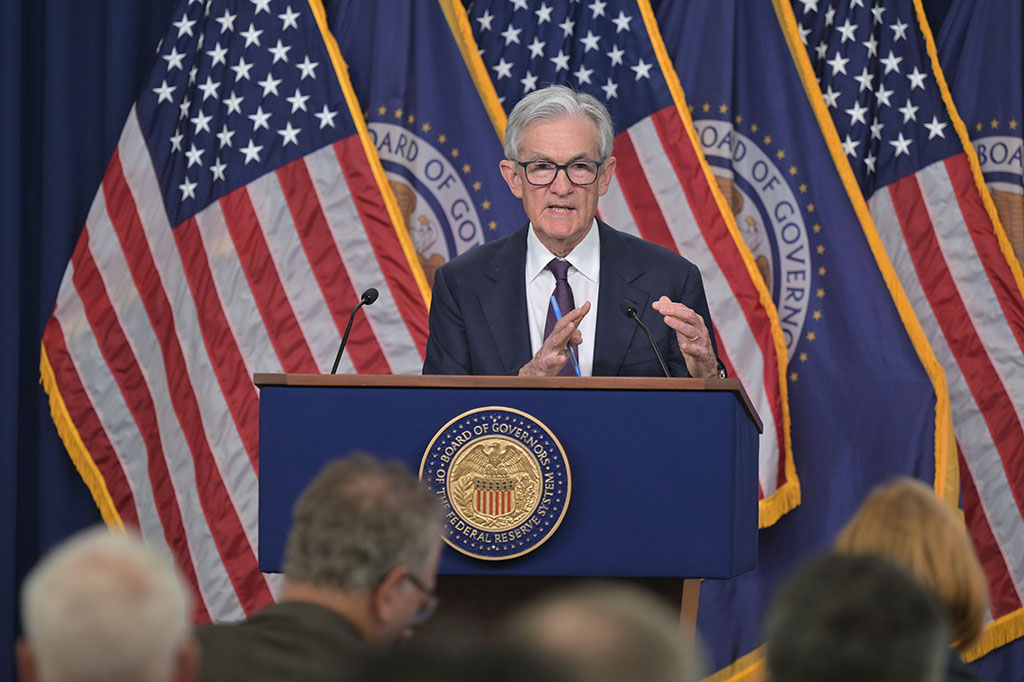
Chair Powell answers reporters’ questions at the FOMC press conference on May 7, 2025.
FOMC meetings, calendars, statements, and minutes are available here.

While certain soft indicators point to a fatigued consumer, the labor market remains resilient. This creates a policy dilemma for the Fed—why cut rates in the face of solid job data and risk fueling inflation? Nonetheless, rising delinquencies on auto loans and credit cards suggest that many Americans are feeling financial pressure despite headline employment strength.

The real estate market, and housing in particular, is experiencing the consequences of this macro backdrop. After a decade of strong appreciation, home prices appear to be leveling off. Affordability challenges persist, with many potential buyers unable to qualify for conventional financing. Even as banks offer competitive pricing on traditional loans, borrowers are increasingly opting for creative, non-traditional solutions—despite the higher cost.

Client feedback continues to reflect a difficult business climate. Many are accessing home equity through cash-out refinances—either to fund new home purchases, support business operations, or consolidate higher-interest debt. As a result, the bulk of today’s lending activity is concentrated in nuanced and bespoke mortgage products that provide the flexibility today’s borrowers require.

Mortgage rate surveys support the view that lenders are aggressively competing for a limited number of qualified prospects. A sampling of current rates across various loan types (for illustrative purposes only) is shown below:

  • Private bank loans: Starting at 5.375%
  • Boutique bank loans: Starting at 6.125%
  • Profit and loss-based loans: Starting at 6.25%
  • Bank statement loans: Starting at 6.500%
  • DSCR (Debt Service Coverage Ratio) loans: Starting at 6.875%
  • Bridge loans: Starting at 8.500%

View the latest interest rates and subscribe to Insignia Mortgage’s Weekly Market Commentary by Top Originator, Damon Germanides.

Market Commentary 04/11/2025

Tariffs, Volatility & Mortgage Market Whiplash

The Trump administration’s aggressive tariff announcements sent global equity and bond markets into a tailspin, driving the CNN Fear & Greed Index down to a 4. We are now at levels not seen since the Great Financial Crisis or the shock of COVID. While the current backdrop may not be as severe, investor panic is evident. Since World War II, global growth has relied on comparative economics — countries focusing on what they produce best and trading for the rest. But persistent U.S. trade deficits have led this administration to push for a more level playing field, targeting tariffs and VAT-related pricing disadvantages overseas. The scale of the proposals, however, rattled bond markets and led to a temporary pullback in policy.

Mortgage rates dipped briefly as the 10-year Treasury yield touched below 4%, but that rally was short-lived. The reversal wasn’t driven by inflation data — CPI and PPI came in cooler than expected — but rather by fears of tariff-induced inflation. Manufacturers are now in a bind and consumer confidence is weakening, which makes passing on higher input costs difficult. As a result, we face potential margin compression, weaker earnings, and continued market volatility.

One bright spot for consumers: oil has dropped below $60/barrel, easing some cost-of-living pressures. And while equity markets have pulled back roughly 10% from recent highs, this correction may be a healthy repricing after an extended period of overvaluation.

In the housing market, expect:

  • Price adjustments as buyers grow more cautious
  • Cash-out refinances by self-employed borrowers seeking liquidity
  • Tighter underwriting as lenders brace for inflation, recession risk, and asset repricing
  • More loan applications moving to the non-QM or private credit space due to tightened credit box by big banks (bank statement loans, no-income verification loans, DSCR loans, bridge loans).

On the interest rate front, Wall Street is split — from zero to four cuts forecasted this year. Based on borrower sentiment and softening labor trends, we believe the Fed may deliver 1–2 rate cuts. Consumers are watching their wallets, and business owners are becoming more defensive.

If the Fed does ease later this year, it could bring much-needed relief to mortgage rates — a welcomed boost for the housing sector.

Market Commentary 04/04/2025

Tariffs Overshadow Strong Jobs Report

Mortgage Rates Fall As Economic Fears Rise

A better-than-expected March jobs report took a back seat to the volatile market response following the latest tariff announcements. Equity markets are experiencing heightened volatility as strategists attempt to assess how U.S. tariffs—and retaliatory measures—will unfold in the coming weeks. One big potential consequence of a trade war is triggering a global recession. There is growing concern that a trade war could lead to stagflation—a slowing economy paired with rising costs.

It remains unclear whether the goal of the tariffs is to bring other nations to the negotiating table for improved trade agreements with the U.S. or if they represent a more permanent shift in trade policy. We hope for the former and that these tariffs serve as leverage to secure better trade deals, ultimately benefiting U.S. trade relationships.

High Volatility

The market’s current anxiety is best exemplified by the VIX above 40 and CNN’s Fear & Greed Index at a reading of 4, which is an extreme fear level. While it’s uncertain whether last week’s developments fully justify this level of negativity, there is a sense that automated trading is amplifying market swings. Wall Street has a reputation for punishing retail investors during periods of heightened volatility.

A look at the 2-year Treasury note suggests the market is pricing in upcoming Fed rate cuts. Despite the Fed Chair downplaying this possibility, the probability of cuts appears to be rising. Long-term inflation expectations are also falling. Significant equity losses and weakening consumer confidence weigh heavy on sentiment. We expect inflation to decline rapidly, driven by reduced government spending and a shift in consumer behavior following major wealth erosion. Lower interest rates are likely to follow.

Positive Outlook for Residential Mortgage Rates

Mortgage rates are improving across the board, benefiting from equity market volatility as banks reprice downward. Many loan products are now offering rates below 5%, which should enhance affordability for homebuyers and incentivize refinancing, particularly for cash-out borrowers. Sellers may also be more willing to reduce home prices amid recession concerns, a desire to raise cash, or a need to lower housing expenses.

Caution for Commercial Real Estate

Unlike the residential market, commercial real estate may not see the same relief. Widening spreads—particularly in high-yield markets—are concerning and should be closely monitored. Riskier segments of the commercial real estate market may face higher borrowing costs and diminished investor appetite if spreads continue to widen and delinquencies rise.